
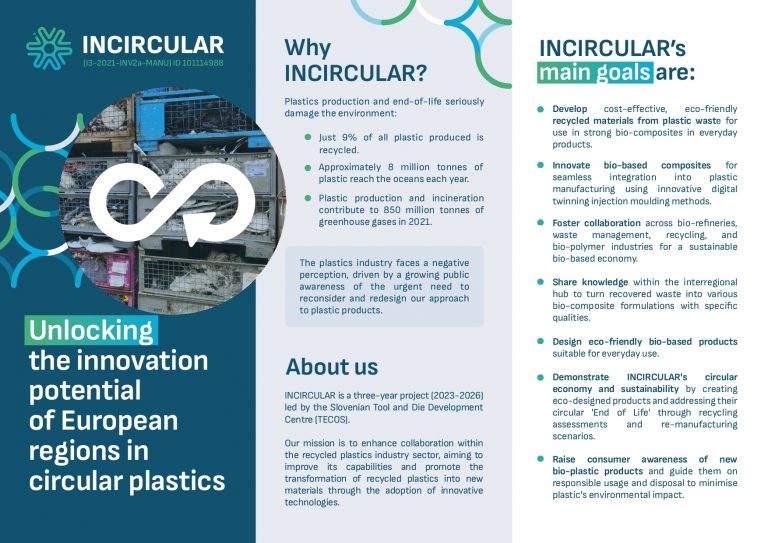
This leaflet provides an overview of the INCIRCULAR project, its objectives and expected results and impacts.
Download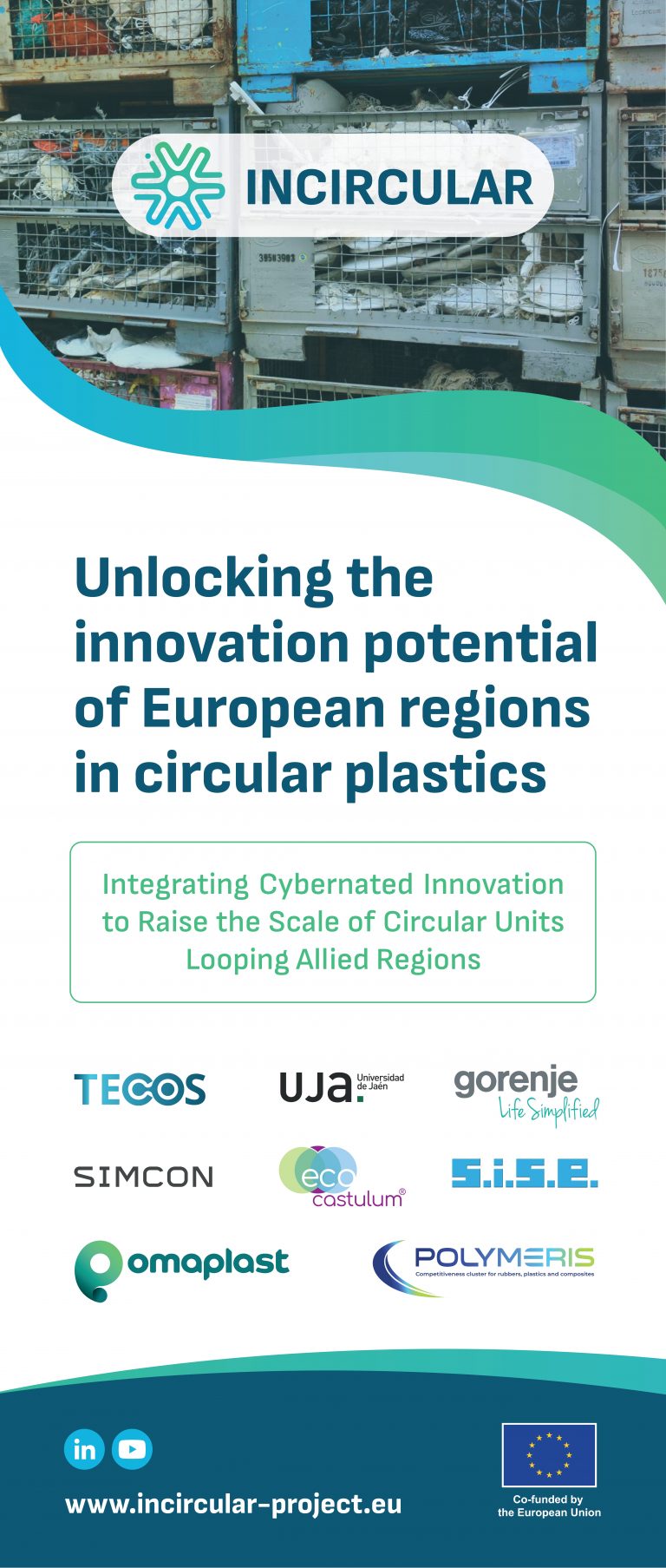
This roll-up is designed with key information and is visually appealing for use at events presenting the INCIRCULAR project.
Download
This branding kit provides basic graphic materials such as the official project logo, the EU emblem, the INCIRCULAR identity manual and templates to present the project.
Download
Downloadable, print-ready toolkit comprising high-resolution exhibition panels, project factsheets, and quick-reference info cards designed to effectively communicate circular plastic innovations and engage stakeholders at regional events, conferences and workshops.
Download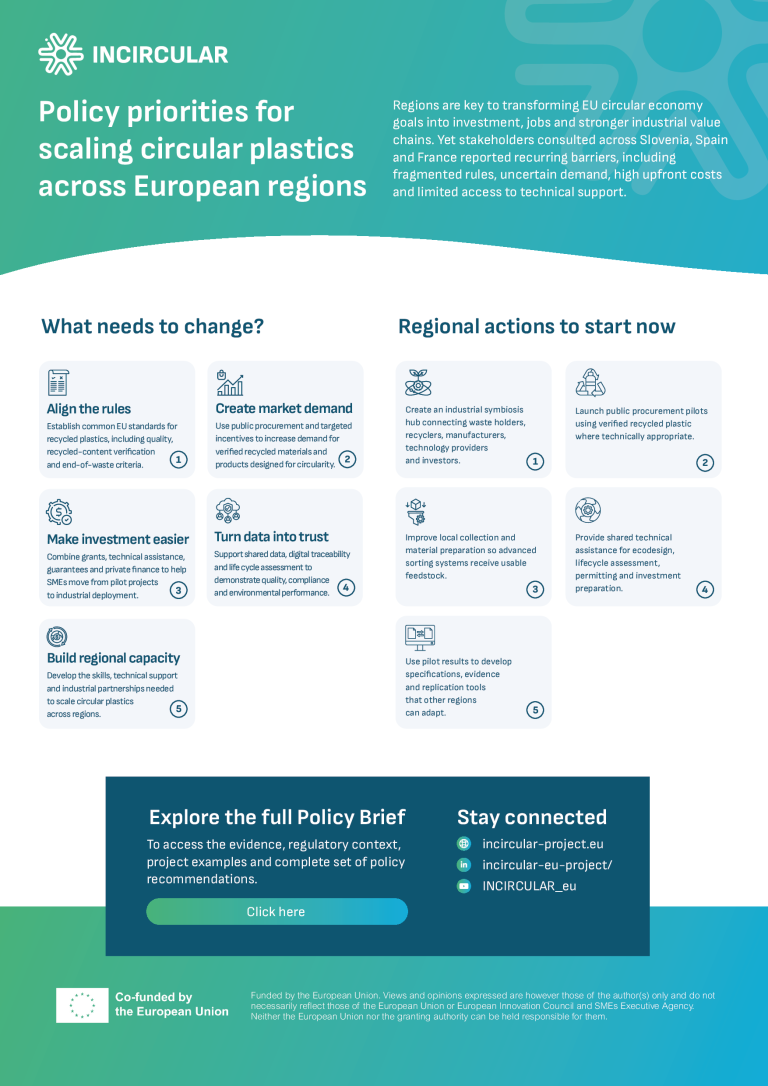
One-page visual summary translating the policy brief's key recommendations into clear, actionable insights for decision-makers.
Download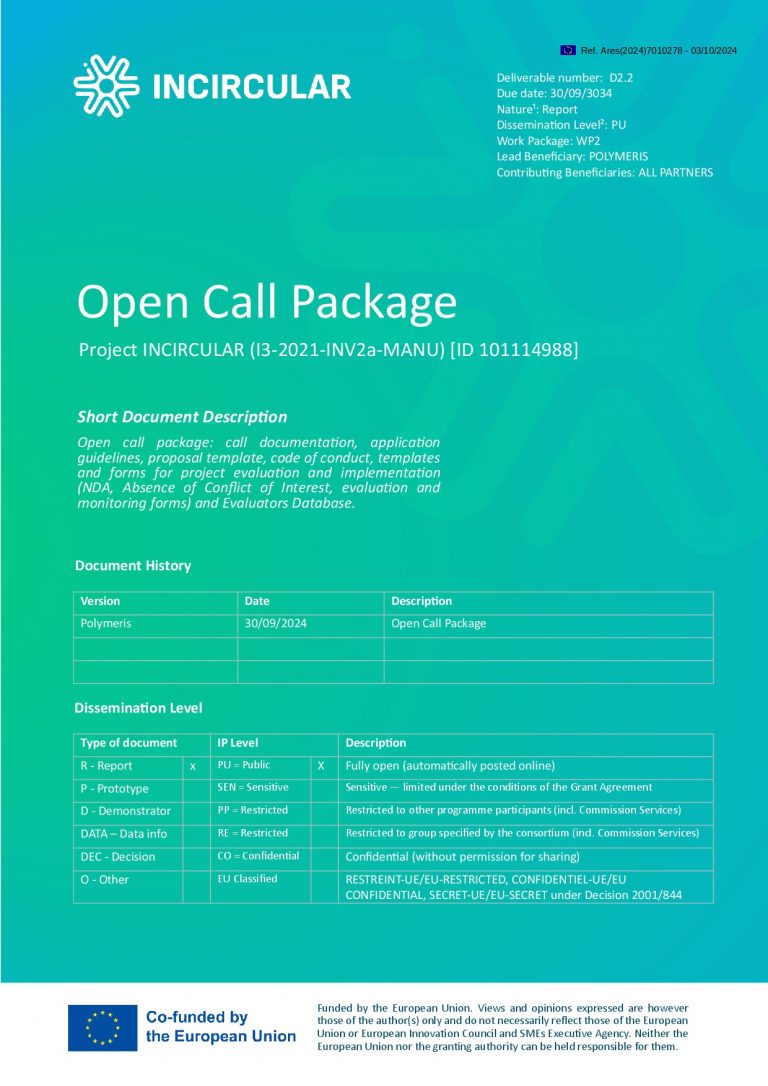
Open call package: call documentation, application guidelines, proposal template, code of conduct, templates and forms for project evaluation and implementation (NDA, Absence of Conflict of Interest, evaluation and monitoring forms) and Evaluators Database.
Download
The protocols and requirements define the validation framework and specifications for project demonstrators. It outlines essential testing—from mechanical characterisation and thermal analysis (such as VICAT softening and rheometry) to chemical resistance—ensuring all requirements are met. Leveraging partner expertise, it serves as the definitive guide for certifying the performance and durability of our solutions
Download
This report presents the development and industrial validation of high-performance composites engineered from recycled polypropylene (rPP) and sustainable fibre reinforcements. By integrating post-consumer waste streams with advanced compounding and injection molding technologies and digital twin simulations (including FEM-based simulations for shrinkage, warpage, and rheological behavior). The study confirms these materials meet rigorous industrial requirements for large-scale components, ensuring a transition to a circular manufacturing model.
Download
In the Incircular project, communication and dissemination actions are implemented to maximize the impact of the project at each step of the process. As described in the plan for communication and dissemination, specific channels of communication will be used to reach the identified target groups of stakeholders to disseminate the project as much as possible.
Download
Two professional dissemination videos have been designed and produced to enhance the project’s communication and dissemination efforts. This deliverable is crucial for effectively conveying the project's objectives, making the project's content understandable for the wider public and ensuring accessibility to knowledge to a diverse audience, including stakeholders, potential partners, and the general public.
Download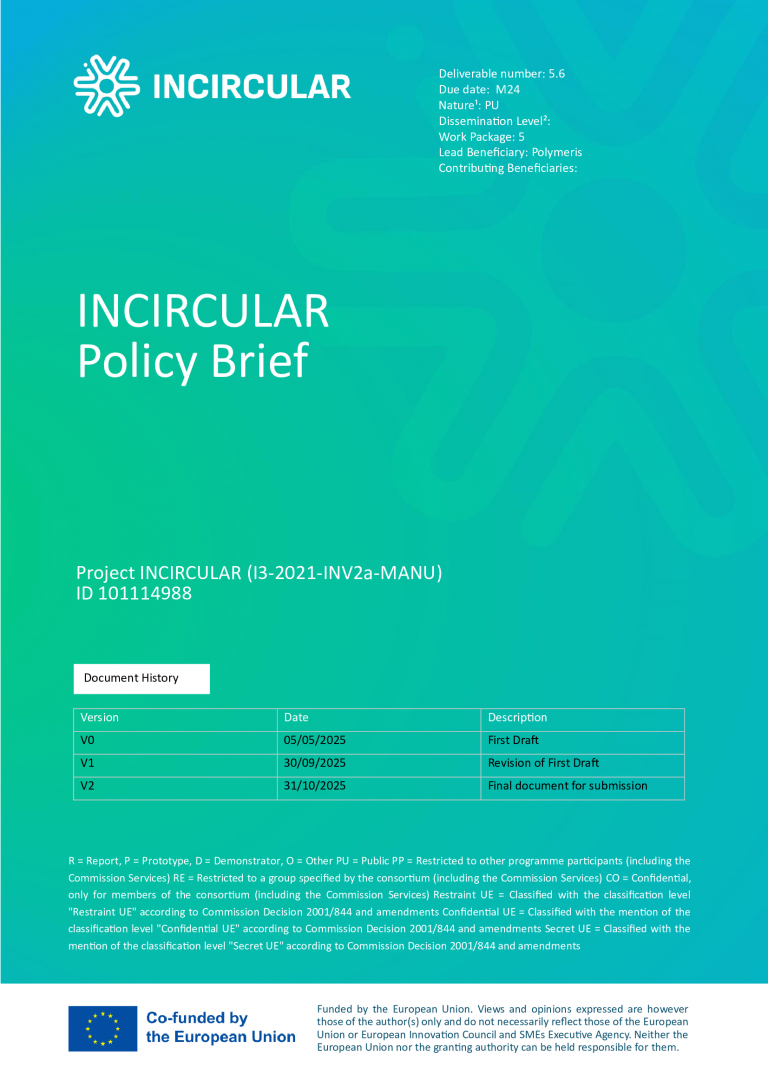
This policy brief highlights the key role of local and regional governments in supporting circular economy investments. Based on INCIRCULAR's collaboration with SMEs, pilot projects, and regional stakeholders, it addresses regulatory and technical barriers and provides practical recommendations.
Download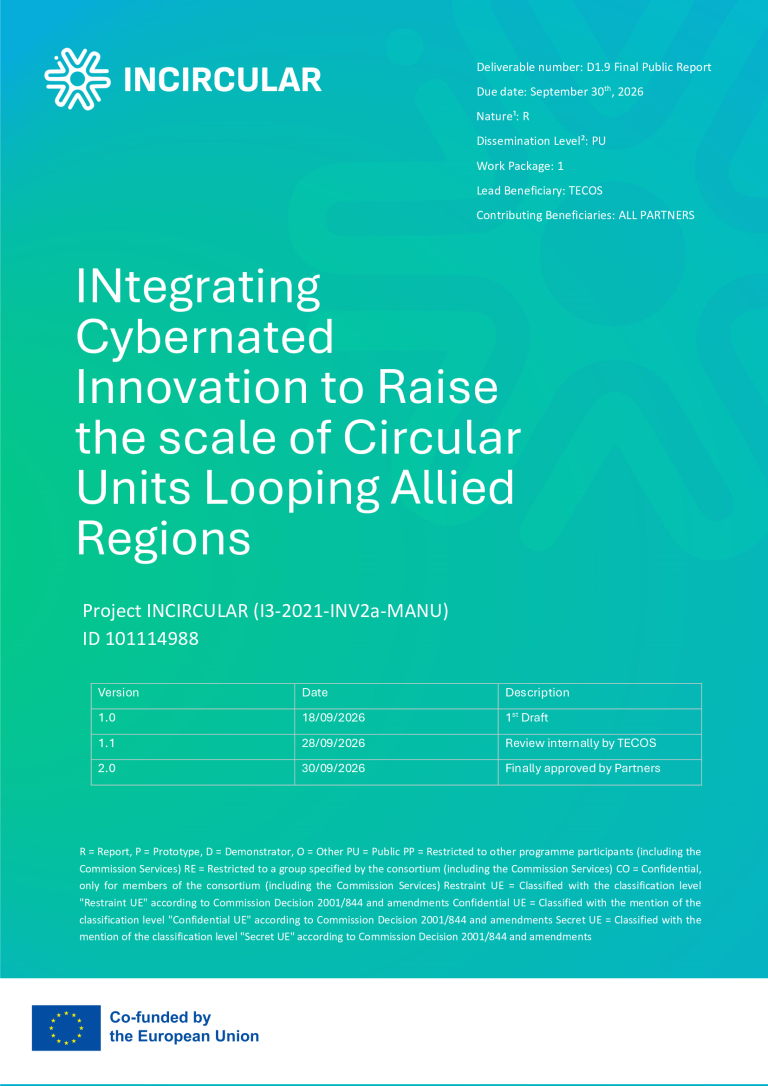
This final public report presents INCIRCULAR’s journey from industrial and post-consumer plastic waste to validated circular manufacturing solutions. It summarises the project’s main results in material development, industrial demonstration, digital process intelligence, interregional replication and SME innovation, together with the tools and evidence available to support further market uptake.
Download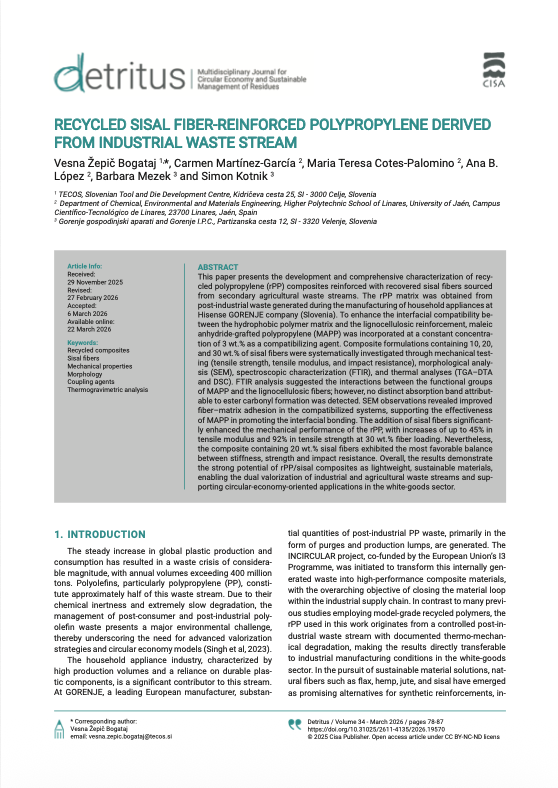
This paper, published in the scientific journal Detritus, explores the development of recycled polypropylene composites reinforced with recovered sisal fibres from agricultural waste streams. The study demonstrates how such waste can be transformed into high-performance materials that support circular economy applications in the household appliances sector.
View the full paper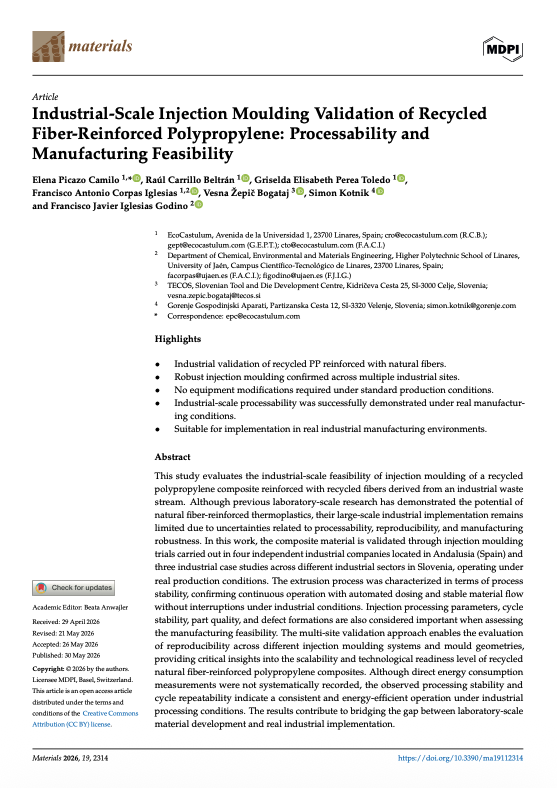
Published in the scientific journal Materials (MDPI), this paper validates the industrial-scale injection moulding of recycled fibre-reinforced polypropylene developed from industrial waste streams. The study demonstrates its processability and manufacturing feasibility in real production environments, supporting the uptake of circular materials in industrial applications.
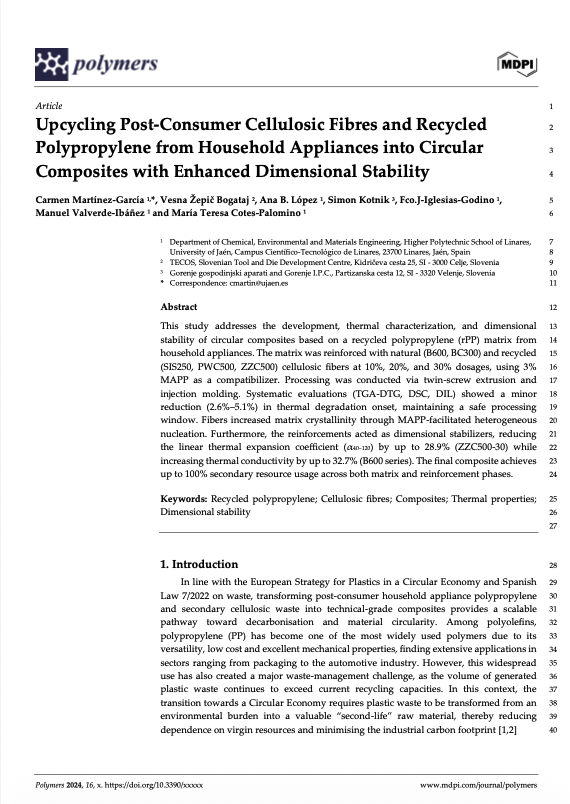
This study, published under Polymers journal (MDPI) addresses the development, thermal characterisation, and dimensional stability of circular composites based on a recycled polypropylene (rPP) matrix from household appliances developed under INCIRCULAR project.